Anuradhapura
About Anuradhapura
Anuradhapura is one of the ancient capitals of Sri Lanka, founded in the 4th century BC and serving as the kingdom's capital for over 1,300 years. This UNESCO World Heritage Site is one of the oldest continuously inhabited cities in the world and remains one of the most sacred cities for Buddhists, containing numerous ancient monasteries, stupas (dagobas), and ruins.
The ancient city covers a vast area and is home to some of the largest brick structures ever built, including massive stupas that are among the tallest pre-modern structures in the world. The sacred Bodhi Tree, grown from a cutting of the original tree under which Buddha attained enlightenment, is over 2,200 years old and is one of the oldest documented trees in the world.
Anuradhapura represents a sophisticated civilization with advanced hydraulic engineering, including reservoirs (tanks) and irrigation systems that are still in use today. The ancient city showcases remarkable architectural and engineering achievements, with well-planned streets, monasteries, and palaces that demonstrate the height of ancient Sri Lankan civilization.
Key Attractions
Sri Maha Bodhi: The sacred Bodhi tree, over 2,200 years old, considered the oldest historically documented tree in the world and the most sacred site in Anuradhapura.
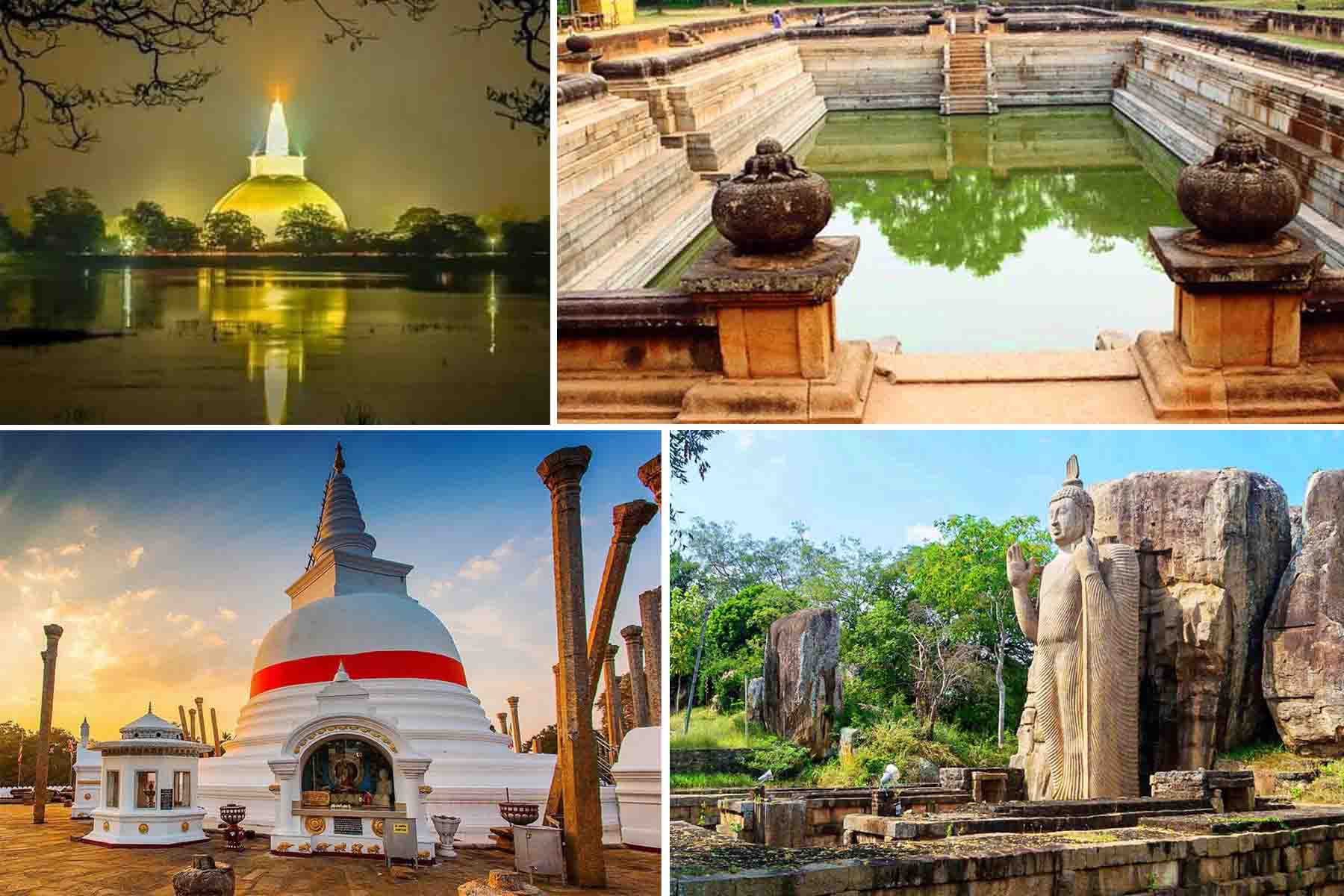
Ruwanwelisaya: A massive white stupa, one of the largest in the world, built by King Dutugemunu in the 2nd century BC.
Jetavanaramaya: One of the tallest stupas in the ancient world, originally 122 meters tall, now 71 meters after restoration.
Abhayagiri Monastery: An ancient monastic complex with ruins of stupas, meditation caves, and monastic buildings.
Kuttam Pokuna (Twin Ponds): Beautiful ancient bathing pools that demonstrate sophisticated hydraulic engineering.
Travel Information
Gallery
.jpeg)